Switch to the Japanese section - 日本語版はこちら
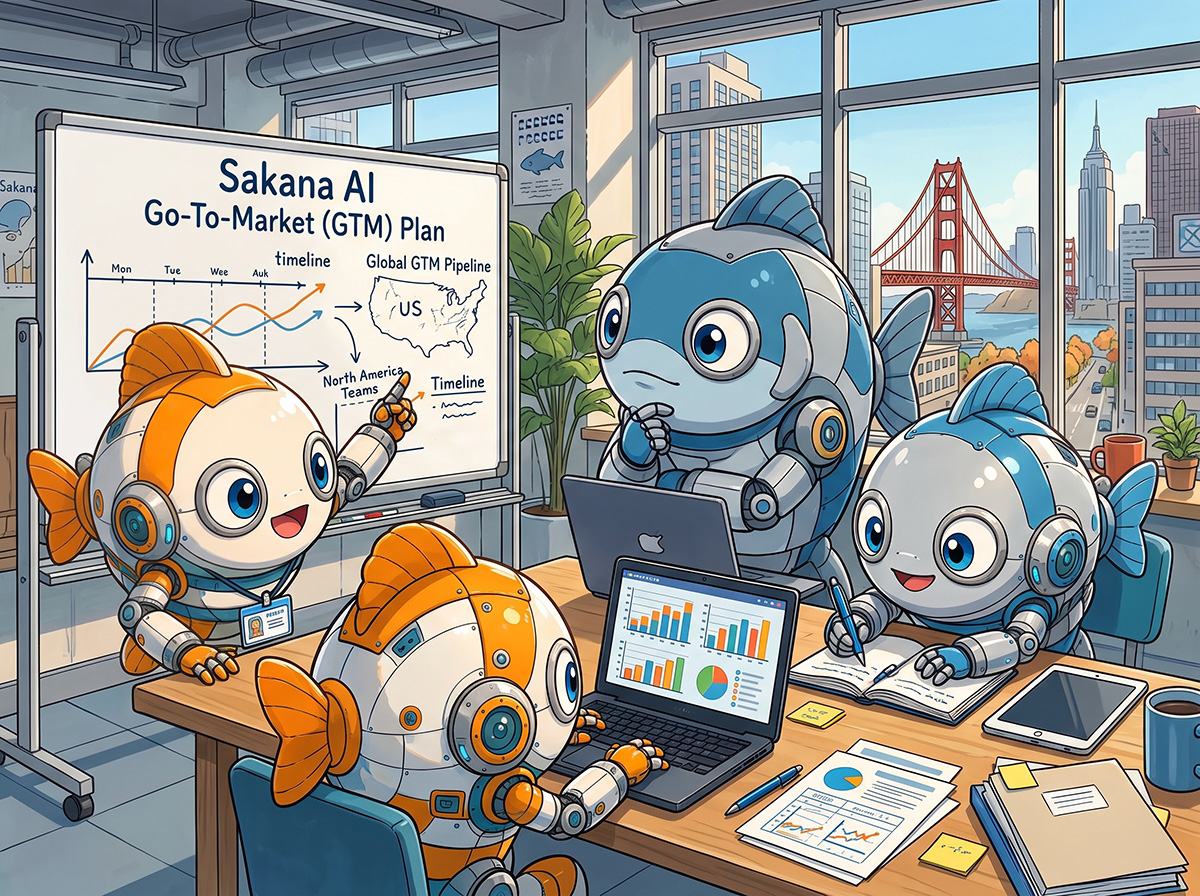
In 2026, Sakana AI released a series of products: Sakana Chat, Sakana Marlin, Sakana Fugu, and Sakana Translate. Known until now as an R&D company, Sakana AI has entered the stage of delivering products born from its research to companies and government agencies. The Go-To-Market (GTM) team that sells and scales those products launched in earnest in September 2026.
Leading the team is Hidekazu Kakishima, who has driven the business launches of new technologies like cloud, IoT, and drones right from the dawn of their respective industries. Why Sakana AI, and why now? How do you sell products that come out of research, and what kind of team do you build to grow them? And what makes it interesting to join a team that still has few established systems? We sat down with him to find out.
Interviewee
|
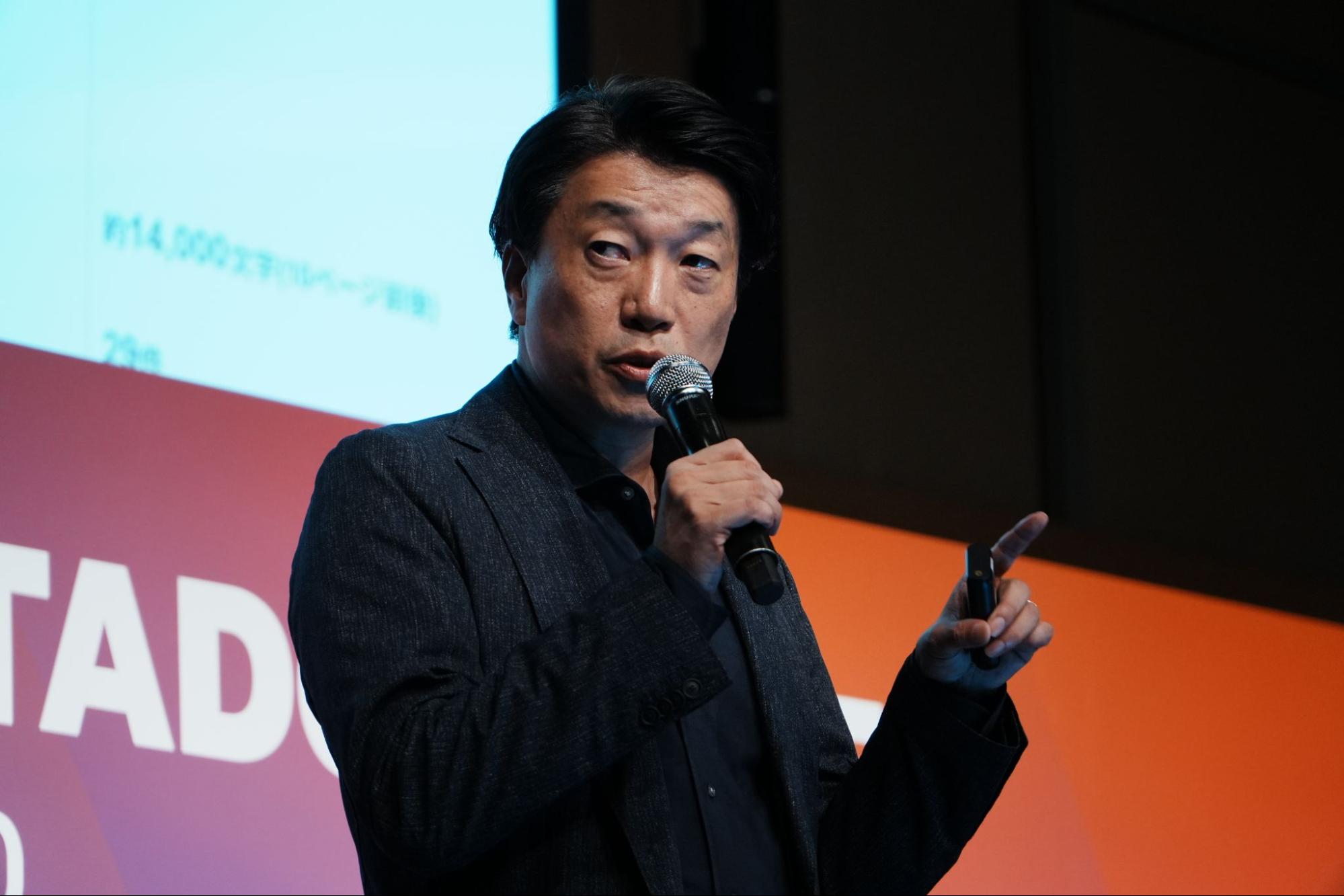
Hidekazu Kakishima
VP of GTM
Led the strategic accounts team during the early days of AWS Japan, then joined IoT connectivity startup SORACOM as a founding member, and later drove the real-world adoption of flying robotics at US drone maker Skydio. He now leads market expansion and value delivery for Sakana AI’s product lineup.
|
The Frontier of Technology Draws Talented People Who Love What’s New
— From AWS to SORACOM, Skydio, and now Sakana AI, you seem to have chosen the early days of a new technology every time. Tell us about your career.
At the root is a belief that technology makes the world better. That is why I have always wanted to work at the leading edge of fields where new technology is emerging. I was not that conscious of it in my twenties, but once I encountered cloud computing at AWS, I switched firmly into that mode.
After that came IoT at SORACOM, drones at Skydio, and now AI. Each is a field where a new industry is being born, and my job is to take the technology at the frontier and put it to work in the market from the inside. That is what I want to do, and I have chosen every step of my career by that standard.
There is one more reason I keep choosing the launch phase. When a new trend emerges, its leading edge attracts talented people who love new things. Learning the latest technology, implementing it, and seeing customers happy is enjoyable in itself. But working alongside those people is the particular pleasure of the early days.
— Given that, why Sakana AI?
Because I thought it was the best AI company in Japan. It is growing fast as a startup, its valuation is rising rapidly, and it is a Japan-born company aiming at the global market with research and development as its foundation. I had been following the company for some time. Then an acquaintance introduced me, and I had the chance to actually hear the story.
Before joining, I spoke with Ren Ito, co-founder and chairman. Hearing his vision of scaling Sakana AI as a business not just in Japan but globally was exciting. The founders and the members are all wonderful people, and in the end, the desire to work with good people was what decided it.
Because the company started from R&D, it has excellent technology and attracts talented people. But turning that into something the world can use is not easy. I felt the company was building a team for exactly that and expanding rapidly, and the GTM team now owns that part: making it usable.
From Research Insights to Products That Reach More Customers
— Let’s talk about that mission of making the technology usable. Where does the GTM team stand today?
Alongside its research, Sakana AI has focused on industries such as finance and defense and implemented AI on the ground at customers. We have now entered a phase of turning the knowledge accumulated there into products and delivering them to a broader range of customers.
That said, releasing a product does not mean customers can use it right away. There will always be situations where the product alone cannot meet a customer’s requirements. To close that gap, we are currently hiring Forward Deployed Engineers (FDEs).
FDEs feed what they learn at the customer’s site back into the product. As that accumulates, we want to increase the number of cases where the product can be used on its own, without an FDE.
Many AI companies are investing in the FDE role right now. At the same time, people sometimes ask how it differs from an engineer who goes on site and builds things for the customer. The difference is precisely this feedback loop. Solving the customer’s problem is not the end. Reflecting that experience back into product improvement is part of the job. That is the role of an FDE at Sakana AI and the model we are aiming for.
The Product Opens the Conversation; the Customer’s Problem Is What We Solve
— The job descriptions for the GTM team use the phrase “product-driven GTM.” It sounds different from both system-integrator development and deploying a SaaS product as is. What is the approach?
When people hear “product-driven,” many picture a one-way push to sell a product that already exists. Our stance is a little different. For us, product-driven means using the product as the starting point for a conversation with the customer. We present the product first, watch the customer’s reaction, and then propose the best way to apply it as a solution. It is less about going out to sell a product and more about matching the product to the customer’s problem.
There are also cases where the customer does not know how to implement it, or where security has to be tailored to specific requirements. These requirements differ by industry and by company, so an FDE steps in to move the deployment forward.
When there are no special requirements, customers can use the product as is. Our API services, for example, are called directly from the customer’s own systems. Sakana Marlin is a research product for business users, aimed mainly at people who do research work every day.
— We understand you are not selling only through your own team, but also place importance on working with partners.
Our resources are limited, so partners are essential. One type is system integrators, whom we are encouraging to build Sakana AI products into their own solutions. The other is technology companies with partner ecosystems, where Sakana AI products are offered through their marketplaces.
This model lets us grow the user base not just in Japan but globally.
Orchestrating Multiple Models, and the Growing Demand for AI Sovereignty
— A bit more on products. Orchestration, which brings in multiple frontier models, is one of Sakana AI’s technical strengths. How are customers responding?
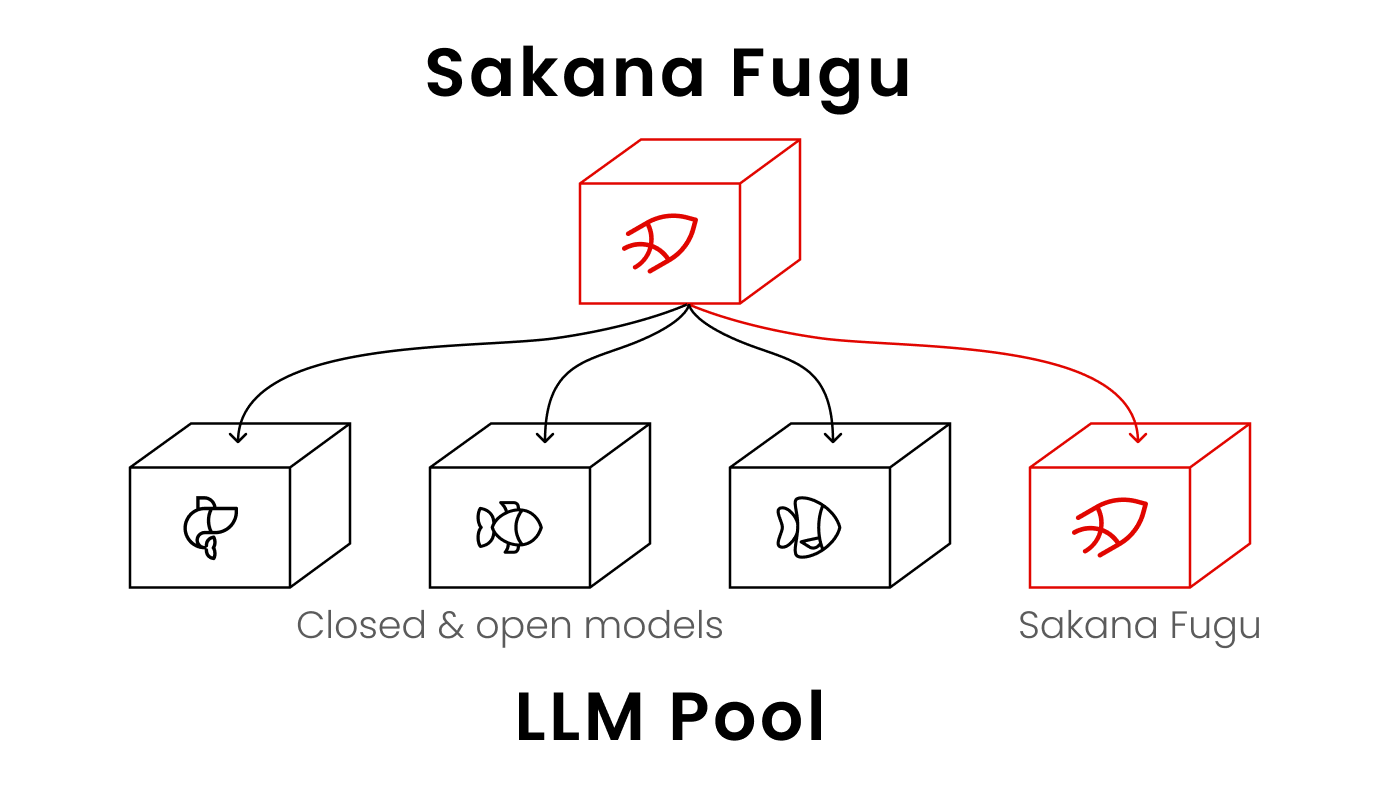
Many companies have recently released features that let you switch between different models. Sakana Fugu does not simply switch models, though. It takes the approach of having multiple frontier models work together on a single task. I think that is a very distinctive feature.
Behind the demand for this approach is a wariness about continuing to depend on a single model, however good it is. In February 2026, the US government instructed federal agencies to stop using Anthropic products, and the US Department of Defense designated the company a supply chain risk. No matter how strong the performance, a model can become unavailable for political or contractual reasons. Many companies must have felt that firsthand.
More and more companies want to use multiple models, and this approach is drawing attention. We also hear concerns that a particular model could suddenly become unavailable. For better or worse, these circumstances are a tailwind, and we are receiving inquiries from many customers.
— Are you seeing changes in customer attitudes around AI sovereignty as well?
I think so. AI is a bigger trend than anything before it, and precisely because of that, awareness of security is extremely high. Awareness of AI sovereignty and data sovereignty is rising among both customers themselves and governments, and requests of this kind are clearly increasing.
And it is not limited to large companies. Small and medium-sized businesses are also interested from a data sovereignty perspective. It has become a theme shared across a wide range of customers.
— Demand is high, yet both customers and sellers still seem to be feeling their way. Compared with cloud and IoT, which you have worked on before, what is the same and what is different?
First, the AI market is overwhelmingly larger. Beyond that, the customer’s situation is different. Cloud had an easy-to-understand framing as a replacement for on-premises. IoT had M2M communications before it, so customers understood it quickly, and the decision was often simply to migrate if it improved efficiency.
AI is not like that. The customers themselves are feeling their way. They do not know what to do. And because information from around the world now arrives flat over the internet, AI players and customers are struggling at the same time. That makes the job of selling harder.
Still, customers have a strong sense that they have to do something. We can approach them exactly where they do not know how, so the business is moving at tremendous speed. On the other hand, models are evolving so quickly that customers tend to avoid long-term commitments. They also want an environment they can use with confidence and safety.
— In that market, where do you aim to be in one year and in three?
The immediate priority is to build up effective deployment results with customers in Japan. But when it comes to expanding globally, waiting until we have a track record in Japan and then taking it overseas would be too slow. So we are moving with the intention of pursuing Japan and overseas in parallel from the start.
In Japan, we will expand broadly through collaboration with the investors who have backed us and through partnerships with a range of partners. Overseas, the thinking is the same: build results with the overseas big tech companies and other investors who have backed us, and scale from there. Ideally, in three years, overseas will account for the larger share.
We Want People Who Enjoy an Environment That Changes Fast
— Let’s turn to the team. The GTM team is hiring for several roles: Account Executive, FDE, Partner Alliances, and Customer Success. For each role, what kind of person do you want to join?
Let me start with what applies to every role. One is enjoying change. Both the industry and the company are moving very dramatically right now, and we want people who can enjoy that and thrive in it. The other is curiosity. Building your work while engaging with a wide range of people, including customers, the industry, and colleagues inside the company, requires curiosity.
On top of that, for Account Executives, the market is large and we expect the deal sizes we sell to grow dynamically. We are looking for people who have built large businesses from zero and closed large deals. Partner Alliances handles the collaboration with system integrators and ecosystems I mentioned earlier. It is a job of designing from scratch who we partner with and how we sell together.
— What kind of person are you looking for as an FDE?
For FDEs, I do not want them to start from “we can’t” when a customer makes a request. The role is to look at the customer’s requirements against our capabilities from a technical standpoint and close the gap between them. Someone who can carry a problem through from discovery to resolution on the technical side is a good fit.
Beyond that, we want people who can look broadly for the next problem and the next opportunity, even outside their scope. Do not stop at solving the issue. Find what is needed next and connect it to product improvement. That is an FDE at Sakana AI.
— Customer Success, a new role you are hiring for, handles customers after deployment, correct?
Yes, it handles follow-up after a customer has deployed. Because models evolve quickly, we need to keep checking whether customers are using them properly and whether new issues have emerged. We will be releasing products aggressively from here on, so combining them into a more efficient setup for the customer is also part of Customer Success’s job.
By the nature of the role, Account Executives move on to the next customer. If deployed customers are left alone, they may switch to another company or simply lose track of what to do. Supporting them there is a very important role.
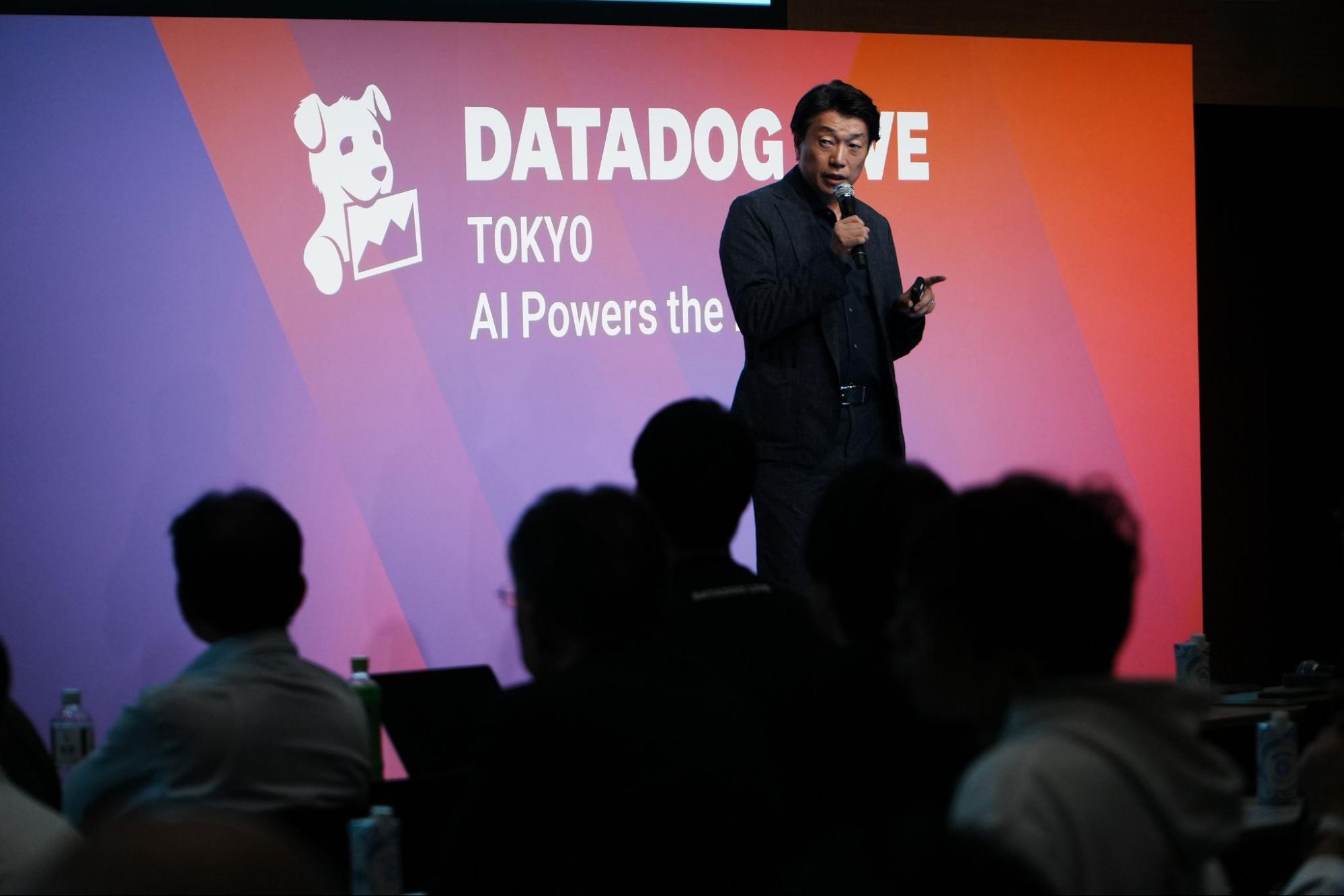
Speaking at a Datadog event, October 2026
Now Is the Only Time You Can Build the System With Us
— What can you gain by joining the GTM team now?
There is still a great deal that has not been systematized, so you get to build those systems with us. That is the biggest thing.
Members from a range of backgrounds are joining, each bringing their own ways of thinking and opinions to the discussion. That produces new insights, and moments where you realize what it means to build something new. Opportunities for this kind of experience are rare. Building from zero at a company riding the big wave of AI is a valuable experience.
And then, from Japan to the world. This is a challenge only Sakana AI can offer. Sakana AI’s development base is in Tokyo. The researchers and the product development team sit at the desks right next to the GTM team. Feedback and feature requests from customers can be discussed with the development side on the spot and reflected in the product right away. There is no waiting for a reply after raising a request to an overseas headquarters.
We want to deliver technology and products born in Japan to customers around the world at this same speed. We are waiting for people who will build that with us.
Careers
Delivering Japan-born AI products to customers around the world. The work of building the system to do that has only just begun. If you are interested in Sakana AI’s GTM team, please visit our careers page.
日本発のAIプロダクトを世界に売る:Sakana AI GTM責任者インタビュー
Sakana AIは2026年、Sakana Chat、Sakana Marlin、Sakana Fugu、Sakana Translateなど、プロダクトを相次いでリリースしました。研究開発企業として知られてきたSakana AIは、研究から生まれたプロダクトを企業や官公庁に届ける段階に入っています。その販売と拡大を担うGTM(Go-To-Market)チームが、2026年9月に本格的に立ち上がりました。
チームを率いるのは、クラウド、IoT、ドローンといった新しい技術が新たな産業を形成する、その黎明期から事業の立ち上げを牽引してきた柿島さんです。なぜ今、Sakana AIなのか。研究から生まれたプロダクトをどう売り、どんなチームで広げていくのか。そして、まだ仕組みのないこのチームに今入る面白さはどこにあるのかについて聞きました。
インタビューイー
|
柿島 英和
Hidekazu Kakishima
VP of GTM
AWSの日本法人立ち上げ期に戦略的アカウントチームを率い、その後IoT通信スタートアップSORACOMの創業メンバー、米国ドローンメーカーSkydioでフライングロボティクスの社会実装を推進。現在はSakana AIにおいてプロダクト群の市場展開と価値提供に責任を持つ。
|
技術の最先端には新しいもの好きの優秀な人が集まる
── AWS、SORACOM、Skydio、そしてSakana AIと、新しい技術の立ち上げ期を選んでこられたように見えます。これまでのキャリアについて教えてください。
根っこにあるのは、テクノロジーは世界を良くしていくという思いです。そのため、新しい技術が生まれる領域の最先端で働きたいとずっと考えてきました。20代の頃はそこまで意識していなかったのですが、AWSというクラウドコンピューティングの技術に出会ってから、はっきりとそのモードに入ったと思います。
その後はSORACOMでIoT、Skydioでドローンに取り組み、今はAIです。いずれも新しい産業が生まれる領域で、その中にいる立場から先端の技術を市場に実装していく。それが私のやりたいことで、キャリアはずっとその基準で選んできました。
新しい領域の立ち上げ期を選び続けてきたのには、もう1つ理由があります。新しいトレンドが生まれると、その先端には新しいもの好きの優秀な人たちが集まるからです。最新の技術を学び、実装してお客さまに喜んでいただくこと自体ももちろん楽しいのですが、そうした人たちと一緒に働けることが、立ち上げ期ならではの面白さだと思っています。
── そのうえで、なぜSakana AIだったのでしょうか。
日本で一番のAI企業だと思ったからです。スタートアップとして速く成長し、企業価値も急速に高まっている。そして、日本発でグローバルを目指し、研究開発を土台に持っている会社です。以前から注目はしていたのですが、知人に紹介してもらい、実際に話を聞く機会を得ました。
入社前に話したのは、共同創業者で社長の伊藤錬です。Sakana AIをスケールするビジネスとして、日本だけではなくグローバルで成長させていくというビジョンを聞いて、非常にワクワクしました。創業者もメンバーも素晴らしい人ばかりで、「いい人と一緒に働きたい」という気持ちが最後の決め手になりました。
研究開発から始まった会社なので、優れた技術があり、優秀な人が集まっています。ただ、それを世界で使えるものにしていくのは、決して簡単なことではありません。そこに向けてチームを作り、急拡大している最中だと感じましたし、その「使えるものにしていく」部分を、今まさにGTMチームが担っています。
研究で培った知見を、プロダクトとして幅広く届ける
── 「使えるものにしていく」というミッションについて伺います。GTMチームは今、どのような状況なのでしょうか。
Sakana AIは研究開発に加えて、金融や防衛といった業界に焦点を当てて、お客さまの現場にAIを実装してきました。そこで蓄積した知見をプロダクトという形にして、より幅広いお客さまに届けていくフェーズに入っています。
ただ、プロダクトを出せばすぐに使っていただけるかというと、そう簡単ではありません。プロダクトだけではお客さまの要件に応えきれない場面がどうしても出てきます。その間のギャップを埋めるために、今はFDE(Forward Deployed Engineer)の採用を進めているところです。
FDEがお客さまの現場で得た知見をプロダクトにフィードバックしていきます。それを積み重ねていくことで、将来的にはFDEが入らなくてもプロダクト単体で使っていただけるものを増やしていきたいと考えています。
FDEは多くのAI企業が力を入れている職種です。一方で、「お客さま先に入って開発するエンジニアと何が違うのか」と聞かれることもあります。そういったエンジニアとFDEとの違いは、まさにこのフィードバックの部分にあります。お客さまの課題を解決して終わりではなく、その経験をプロダクトの改善に反映するところまでがSakana AIのFDEの役割であり、目指す姿です。
トリガーはプロダクトだが解くのはお客さまの課題
── GTMチームの募集ポジションの説明には「プロダクトドリブンなGTM」という言葉があります。SIerによる開発とも、SaaSプロダクトをそのまま導入するのとも違うように感じますが、どのようなアプローチなのでしょうか。
「プロダクトドリブン」というと、製品ありきで一方的に売り込む姿を想像される方も多いと思います。しかし、私たちのスタンスは少し違います。私たちが考えるプロダクトドリブンとは、プロダクトをお客さまとの対話のきっかけにするということです。まずプロダクトを提示して、お客さまの反応を見ながら、その解決策として最適な活用法をご提案していく。プロダクトを売りに行くというより、お客さまの課題にプロダクトを当てていく感覚に近いですね。
また、どう実装すればいいか分からない場面や、セキュリティを個別の要件に合わせる必要がある場面もあります。こうした要件は業界ごと、会社ごとに違うので、そこにFDEが入って導入を進めていきます。
一方で、個別の要件がなければ、プロダクトをそのまま使っていただけます。例えばAPIのサービスは、お客さまのシステムから直接呼び出して使う形です。Sakana Marlinはビジネス層向けの調査プロダクトで、日々調査業務にあたっている方々を主なターゲットにしています。
── 自社のチームだけで売るわけではなく、パートナーとの協業も重視されていると伺いました。
私たちのリソースは限られていますから、パートナーの力は欠かせません。1つはSIerで、SIerにはSakana AIのプロダクトを各社のソリューションに組み込んでもらうよう働きかけています。もう1つはパートナーエコシステムを持つテクノロジー企業です。そのような企業のマーケットプレイスの中で、Sakana AIのプロダクトを提供してもらう形です。
この形であれば、日本だけではなくグローバルで使っていただけるユーザーを増やしていけます。
複数のモデルを協調させる「オーケストレーション」と、AI主権への手応え
── プロダクトの話をもう少し伺います。複数のフロンティアモデルを取り込む「オーケストレーション」は、Sakana AIが強みとする技術のひとつだと思います。お客さまの反応はいかがですか。
いろいろなモデルを使い分けられるようにする機能は、最近多くの会社が出しています。ただ、Sakana Fuguは単にモデルを切り替えるのではなく、複数のフロンティアモデルを協調させて1つのタスクにあたらせるというアプローチをとっています。これは非常にユニークな特徴だと思っています。
このアプローチが求められる背景には、どれほど優れたモデルであっても、単一のモデルに依存し続けることへの警戒があります。2026年2月には、米国政府が連邦機関にAnthropic製品の使用停止を指示し、米国防総省が同社をサプライチェーンリスクに指定する出来事がありました。どんなに性能が高くても、政治や契約の事情で使えなくなることがある。そのことを多くの企業が実感したはずです。
複数のモデルを使い分けたいという企業が増えてきていて、このアプローチに注目が集まっています。特定のモデルが突然使えなくなるのではないか、という不安も耳にします。こうした事情が良くも悪くも追い風になっていて、多くのお客さまから引き合いをいただいています。
── AI主権という文脈でも、お客さまの反応は変わってきていますか。
変わってきていると感じます。AIはこれまでにないほど大きなトレンドで、それだけにセキュリティへの意識が非常に高まっています。「AI主権」「データ主権」への意識も、お客さま自身と政府の双方で上がってきていて、そうした要望は明らかに増えています。
しかも、気にされているのは大企業に限りません。中小企業の方々もデータ主権の観点で関心を持たれています。幅広いお客さまに共通するテーマになってきました。
── 需要は多い一方で、お客さまも売る側もまだ手探りの状態だと感じます。これまで携わってきたクラウドやIoTという技術と比べて、何が同じで何が違うのでしょうか。
まず、AIは市場が圧倒的に大きい。そのうえで、お客さまの状態が違います。クラウドはオンプレミスからの置き換えという分かりやすい構図がありましたし、IoTも以前からM2M通信というものがあったのでお客さまの理解が早く、効率が上がるなら移行する、という判断が多かったのです。
AIはそうではなく、お客さま自身が手探りです。何をやればいいか分からない。しかも世界中の情報がインターネットでフラットに届くようになっているので、AIプレイヤーもお客さまも同時に悩んでいる状態です。そのため、営業としての難易度は上がっています。
ただ、お客さまは「何かやらないといけない」という強い危機感を持っています。やり方が分からないところに私たちがアプローチできるので、ビジネスはすごい勢いで動いています。一方で、モデルの進化が速すぎて、お客さまは長期のコミットを避ける傾向にあり、加えて、安心・安全に利用できる環境を求めています。
── そうした市場の中で、1年後、3年後にどこを目指しているのでしょうか。
直近の優先順位は日本のお客さまで効果的な導入実績を増やしていくことです。ただ、グローバルでビジネスを展開していくにあたり、日本である程度の実績ができてから海外に持っていこうとしても、それでは遅い。ですから、最初から日本と海外を並行して進めるつもりで動いています。
日本では出資いただいている投資家の方々との連携や、さまざまなパートナーとの協業を通じて幅広く展開していきます。海外も同じ考え方で、出資いただいている海外のビッグテックなどと実績を作り、そこからスケールさせていく。3年後には、海外の比重のほうが大きくなっているのが理想です。
求めるのはドラスティックに動く環境を楽しめる人
── ここからはチームの話を伺います。GTMチームでは、Account Executive、FDE、パートナーアライアンス、カスタマーサクセスと、複数の職種を募集します。職種ごとに、どのような人に来てほしいでしょうか。
まず、全職種に共通して言えることからお話しします。1つは、変化を楽しめることです。今は業界も社内も非常にドラスティックに動いていますので、それを楽しんで活躍できる人に来てほしいと思っています。そしてもう1つは好奇心です。お客さま、業界、社内のメンバーなど、幅広い人たちと関わりながら仕事を組み立てていくには好奇心が欠かせません。
そのうえで、Account Executiveについては、市場が大きく、私たちが販売する金額もダイナミックに増えていくと予想しています。大きなビジネスをゼロから組み立ててきた人、大型の案件をクローズしてきた人が望ましいです。パートナーアライアンスは、先ほどお話ししたSIerやエコシステムとの協業を担う役割で、誰と組み、どう一緒に売るかをゼロから設計していく仕事になります。
── FDEについては、どのような人を求めていますか。
FDEには、お客さまの要望に対して「できません」から入らないでほしいと思っています。技術的な観点で、お客さまの要件と私たちのケイパビリティを照らし合わせたときに、そのギャップを埋める役割です。課題の発掘から解決まで、技術面でやり切れる人が向いています。
さらに言えば、スコープ外のところでも幅広く次の課題を見つけ、機会を探せる人に来てほしい。解決して終わりにせず、次に何が必要かを見つけて、プロダクトの改善につなげていく。それがSakana AIのFDEです。
── 新たに募集するカスタマーサクセスは、導入後のお客さまを担当する役割ですね。
はい、導入していただいた後のフォローアップを担います。モデルの進化は速いので、きちんとした使い方ができているか、新たな課題が出ていないかを継続的に見ていく必要があります。これからプロダクトを積極的に出していきますから、それらを組み合わせてより効率的な仕組みにしていくのも、カスタマーサクセスの仕事です。
Account Executiveは役割上、次のお客さまへ向かっていきます。一方で、導入したお客さまをそのままにしておくと、他社に移ってしまったり、そもそもどうしていいか分からなくなったりする。そこを支える役割は、とても重要だと考えています。
2026年10月 Datadogのイベントにて登壇
仕組みを一緒に作っていけるのは今だけ
── 今、GTMチームに入るからこそ得られるものは何でしょうか。
まだ仕組み化できていないところがたくさんあるため、その仕組みを一緒に作っていけること。それが一番だと思います。
いろいろなバックグラウンドのメンバーが入ってきていて、それぞれの考え方や意見を持ち寄ってディスカッションしています。そこから新たな気づきがあったり、「新しいものを作るとはこういうことなのか」と実感できたりする。こういう経験ができる機会は、なかなかありません。AIという大きな波の中にいる会社で、ゼロから作っていく。これは貴重な経験だと思います。
そして、日本から世界へ。これはSakana AIだからこそできる挑戦です。Sakana AIは、開発の拠点が東京にあります。研究者も、プロダクトの開発チームも、GTMチームのすぐ隣のデスクに座っています。お客さまから得たフィードバックや機能追加の要望を、その場で開発側とディスカッションして、すぐにプロダクトに反映できる。海外の本社に要望を上げて返事を待つという時間は必要ありません。
日本で生まれた技術とプロダクトを、このスピード感のまま世界のお客さまに届けていく。それを一緒に作っていける方をお待ちしています。
採用情報
日本発のAIプロダクトを、世界のお客さまに届ける。その仕組みを作る仕事は、まだ始まったばかりです。Sakana AIのGTMチームに関心をお持ちの方は、ぜひ採用情報ページをご覧ください。